
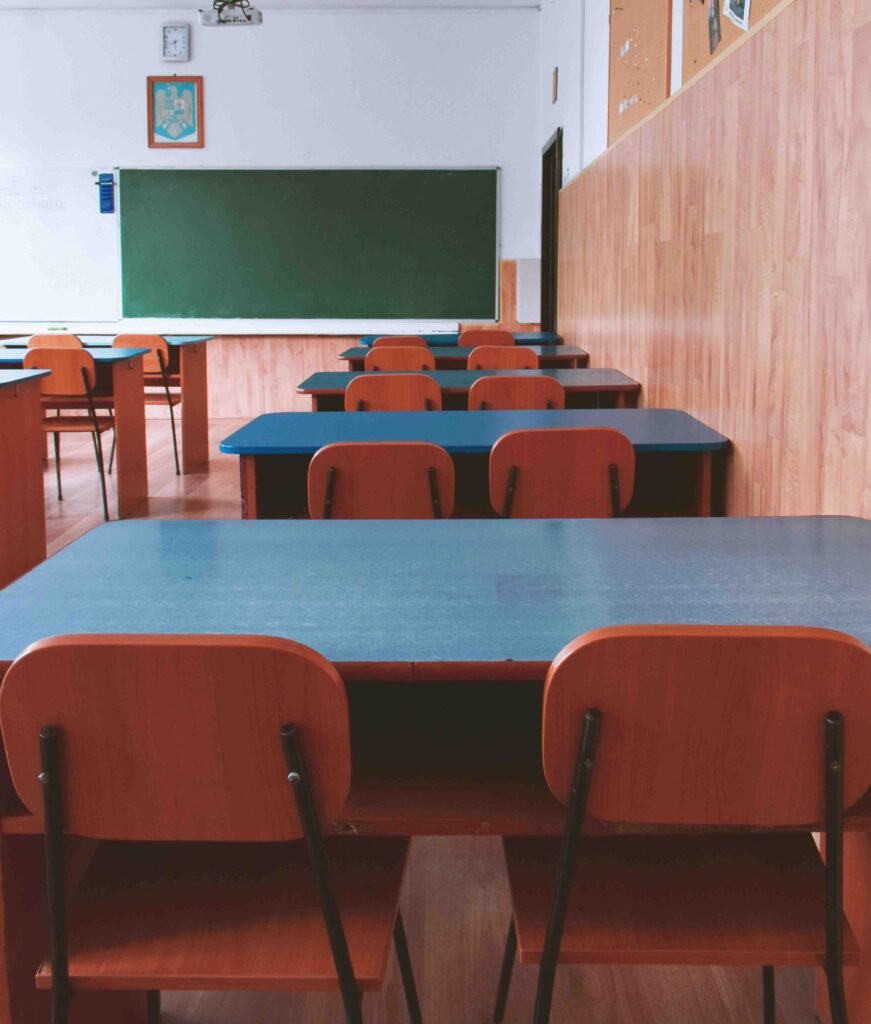
Kenya’s Competency-Based Curriculum pushed a large cohort of learners into junior secondary grades faster than classrooms, desks and laboratories could be built. This case profile documents a 900-place junior secondary school furniture package in Kenya: the specification, the container loading plan, the installation sequence and the acceptance criteria. It is the same scope of work that county education offices now tender in Nairobi, Kisumu, Mombasa, Nakuru and Eldoret, and every figure below comes from the project’s own documents rather than from a brochure.

Project Brief: A 900-Place Junior Secondary School Upgrade
The brief came from a county junior secondary upgrade driven by the Competency-Based Curriculum transition and the 100 per cent primary-to-secondary transition commitment. Eighteen stream classrooms of fifty learners each set the core demand: 900 student desk and chair sets. The package also covered twenty teacher desks and chairs, six science laboratory benches with reagent shelving, forty library reading places and 200 examination-hall seats that double as assembly seating. Budgets of this kind are approved in Kenya shillings (KES) and released against delivery milestones, so the bill of quantities had to separate flat-packed furniture, assembly labour and surface transport into distinct line items instead of one landed unit price. Three documents anchored the specification: the junior secondary implementation guidelines issued by the Kenya Ministry of Education, the county bill of quantities, and the inclusive-education benchmarks described on the UNICEF Kenya education programme page.
Site Conditions in Kenya That Rewrote the Specification
Kenya is not one climate, and the specification was revised three times because of it. Coastal sites such as Mombasa and Kilifi expose steel frames to salt-laden air, so the project required powder coating of at least 60 microns over phosphated steel, or hot-dip galvanising for assembly-hall and outdoor frames; an unprotected tube rusts through within a single long-rains season. Arid and semi-arid counties such as Garissa, Wajir and Turkana bring abrasive dust and unrelenting ultraviolet light, which drove sealed drawer runners, capped tube ends and UV-stabilised polypropylene seat shells rather than brittle recycled plastic. Termites remain the single largest threat to solid timber in Kenya, so no untreated wood was allowed in contact with the floor: legs and stretchers are either kiln-dried hardwood held between 8 and 12 per cent moisture content, or steel and plywood. Highland schools in Nakuru and Eldoret needed a wider seat-height range for older learners in cold morning sessions, which is why the order included height-adjustable units for the upper grades.
The Furniture Package and How It Fits in Containers
A flat-packed single student desk and chair set occupies roughly 0.15 cubic metres, so a 40-foot high-cube container carries about 450 sets once cartons, pallets and loading gaps are allowed for. The 900 places therefore shipped as two full high-cube containers, with the teacher desks, laboratory benches, library tables and examination seating consolidated into a third part-loaded container together with the spare-parts allowance. The loading plan was fixed before production started, not after: every carton carries a block code, a stream-room code and a hardware kit list, so installation teams open cartons by classroom rather than by product type. Mixed loading is where most school furniture projects lose time and money, and the packing sequence is set out in our guide to flat-pack versus pre-assembled school furniture shipping. The desk specified here is the single student desk and chair used across our classroom range.
Shipping Into Mombasa and Clearing to the School Gate
The programme was purchased on FOB terms out of South China, which kept the factory price and the freight price separate and made the county’s budget comparison honest. The project schedule allowed 28 to 35 days at sea to Mombasa, then rail or road onward through the inland container depot at Embakasi and finally to the county. The document set was assembled before the deposit was paid: commercial invoice, packing list, bill of lading, certificate of origin, and model-specific strength and stability test reports naming the exact desk and chair model being shipped. Third-party pre-shipment inspection was written into the contract as a condition of the balance payment. Because a large share of Kenyan junior secondary upgrades is donor-financed, documentation standards are not administrative decoration; the World Bank’s Secondary Education Quality Improvement Project has financed classroom and laboratory construction across 25 counties, and its reporting requirements cascade down to every supplier.
Installation, Handover and Inspection
Installation ran block by block over eleven working days, with two-person teams working from the same carton sequence used at the factory. Each frame bolt was torque-checked and paint-marked, laboratory benches were anchored to the floor and wall, and every chair shell was inspected for moulding flash before it entered a classroom. The snag list was kept open for seven days after the last block, and the school signed off against the bill of quantities rather than against a delivery note. Two contract terms mattered more than any other at handover: a spare-parts allowance of five per cent of high-wear items shipped inside the original container, and a 60-month structural warranty whose remedy is replacement parts rather than a refund. Coating thickness and timber moisture content were printed on the packing list, so the school could verify materials on arrival. Examination-hall seating followed fixed row spacing, the same principle covered in our exam-hall furniture guide for Kenya.
Cost of Ownership: What the School Measures After Handover
The acceptance criteria written into this contract were deliberately measurable: annual damage to chair shells below two per cent, zero structural failures on laboratory benches, and no full repaint required before four years. The maintenance ledger is kept in Kenya shillings per learner place per year, which is the only figure a school committee can compare over time. That ledger is where the economics of the project actually show up. Untreated timber desks bought locally can be replaced twice within the working life of one properly specified flat-packed set, and each replacement cycle carries its own transport, assembly and disposal cost. Imported flat-packed furniture costs more up front, but the cost per learner-place-year falls below the replacement cycle once spare parts arrive inside the original container at negligible additional freight. The pressure that makes this difference visible is class size, which remains very large in the counties where new junior secondary streams were added fastest.
Send us your bill of quantities, target counties and intake date and we will return a container loading plan and an FOB quotation. Start from our school furniture range, review auditorium and lecture hall seating for assembly halls, and read our procurement FAQ for African education buyers before you write the tender specification.