Tanzania has already fed most of its schools. What remains is the harder part. A commitment registered by the Prime Minister’s Office with the Global Nutrition Report’s Nutrition Action Framework tracker sets out to increase “the number of schools providing school meals to reach 100% from the current 80%,” measured on the share of schools that provide meals, with a baseline of 80% in July 2024 and a target of 100% by June 2029. That last twenty percent is not a food problem. It is a building problem: the schools still outside the programme are, by definition, the ones that never had a kitchen or a covered place to eat. Meanwhile WFP’s country strategic plan for Tanzania (2022–2027) confirms it “will also introduce new activities in the areas of school feeding.” This guide covers school dining hall furniture in Tanzania for the schools that still have to build one.
What the 80-to-100 Push Means for Furniture
Read the commitment carefully, because it changes what you buy:
- The easy capacity is already built. Eighty percent of schools feed today. If your school is in that group, the question is whether your existing hall survives the volume—not whether it exists.
- The remaining twenty percent need a first hall, not more seats. A school with no covered eating space does not fail for want of benches. It fails because there is nowhere to put them.
- A national deadline creates a procurement wave. With a June 2029 target, the schools that commission early get steel at today’s price; those that wait compete for fabrication capacity in the final two years.
And the case for spending on this rather than only on food is set out in WFP’s own Tanzania data: 30% of children under five are stunted, 59% of families cannot afford a nutritious diet, and low secondary education for girls is attributed largely to early marriage and unplanned pregnancies, with Tanzania ranked 131 of 193 on the 2022 Gender Inequality Index. A supervised, clean place to eat is retention infrastructure.
Sources: WFP Tanzania (External Link), the WFP Tanzania country strategic plan 2022–2027 (External Link), the Prime Minister’s Office commitment record (External Link) and the Ministry of Education, Science and Technology (External Link).
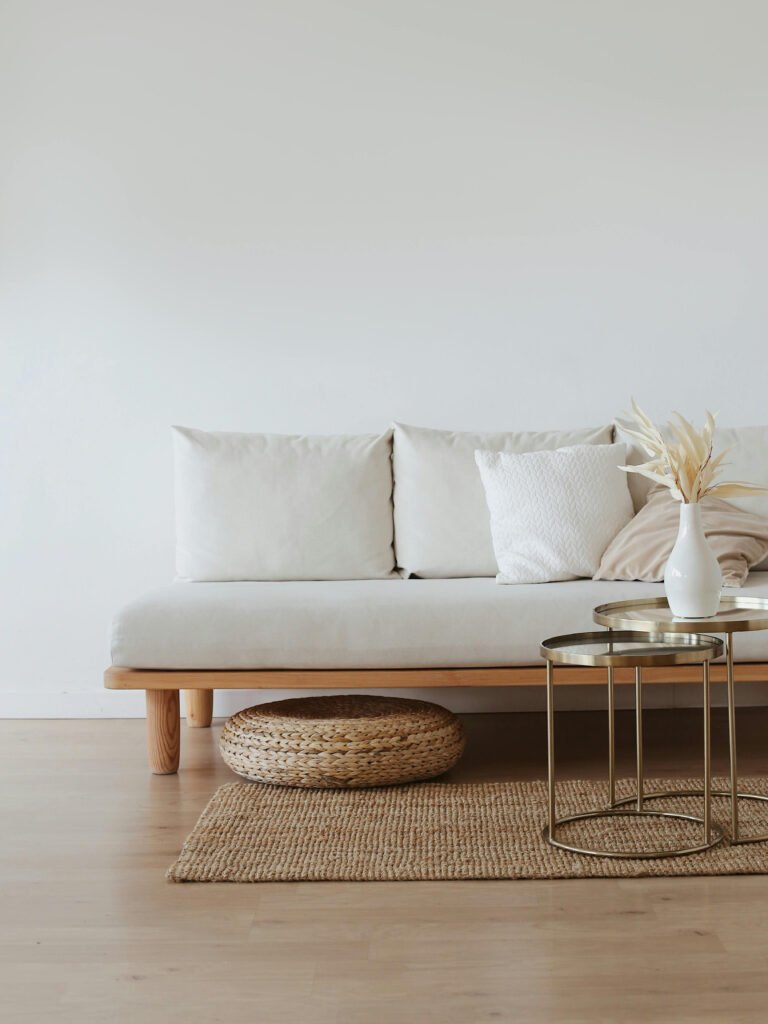
[Image 1: Refectory table and bench units with a serving counter in a Tanzanian school dining hall]
Alt: school dining hall furniture in Tanzania-refectory table and bench set with serving counter for school meals programme Dar es Salaam
Why School Gardens Change the Brief
This is the detail that separates a Tanzanian brief from a grain-based programme. WFP’s technical support to the Government on school meals “includes the establishment of school gardens to improve access to nutritious foods such as biofortified fruits and vegetables.”
Fresh produce behaves nothing like sacks of grain:
- It is perishable, so it arrives often and in smaller loads. You do not need a single enormous dry store; you need space that turns over.
- It must be washed before it is cooked. Biofortified fruit and vegetables come in with soil. That means a wash and prep area with real drainage—a raised, sloped floor that can be hosed down, and a stainless prep table, not a wooden one.
- It needs somewhere to drain and dry. A vegetable rack is cheap; mouldy produce thrown away is not.
- Both systems still need a dry store. Maize, rice, pulses, oil and salt still arrive in bulk, so keep a bay rated for 50 kg sacks and a raised pallet base as well.
A hall briefed only for sacks will end up washing vegetables outdoors, in the mud, beside the queue.
Specification Benchmarks
Treat these as design targets to confirm with your supplier, not as regulator-published dimensions:
| Feature | Design target | Why It Matters |
|---|---|---|
| Table edge per learner | 550–600 mm | Below this, trays overlap and food is spilled |
| Seats per table unit | 6 (3 per side) | Matches the arithmetic used below |
| Unit footprint | 1.80 m × 0.70 m | A known number makes layout calculable |
| Seating clearance | 750 mm per long side | Knees and stools need real space |
| Surface finish | Fully sealed, easy-wipe | Charcoal and firewood cooking means soot |
| Joint construction | Through-bolted, not glued | A shaken, wiped table loosens glue joints |
| Bench fixing | Floor-fixed or weighted | Benches walk across a hall within a term |
| Wash/prep table | Stainless, with drainage | Fresh produce brings soil and water |
| Wash/prep floor | Raised, sloped, hoseable | Mud beside a queue is a daily reality |
| Dry store load rating | Stated per shelf for 50 kg sacks | Maize, rice and pulses arrive in bulk |
| Vegetable drying rack | Slatted, off the floor | Damp produce spoils before it is cooked |
| Serving counter | Continuous, tray-height | A discontinuous line is two queues |
Purchase priority: covered floor area first, serving counter second, seating sized to the schedule third, wash/prep area fourth, dry store fifth.
The Cost per Meal Arithmetic
Dining furniture is usually argued as a capital cost. It is more useful as a per-meal cost, because that is the number a school feeding committee can compare against the price of food.
Worked example, using clearly labelled planner assumptions—an 800-learner school, one meal a day, 200 school days, a 60-minute serving window, 15 minutes of seat occupancy for queue, eating and clearing, and an indicative unit price of TZS 2,200,000 for a six-seat table and bench set:
- Annual meals: $800 \times 200$ days $=$ 160,000 meals per year.
- Seat turnover: $60 \div 15$ minutes $=$ 4 sittings per seat.
- Seats required: $800 \div 4 =$ 200 seats—not 800.
- Table units: $200 \div 6 =$ 34 units.
- Furniture cost: $34 \times$ TZS 2,200,000 $=$ ≈ TZS 74.8 million.
- Amortised over a 10-year life (1,600,000 meals): $74{,}800{,}000 \div 1{,}600{,}000 =$ ≈ TZS 47 of furniture per meal.
- Now buy one seat per learner instead: 800 seats $= 133$ units $=$ ≈ TZS 292.6 million, or $292{,}600{,}000 \div 1{,}600{,}000 =$ ≈ TZS 183 per meal.
- The gap: roughly TZS 136 per meal, or about TZS 21.8 million a year of avoidable cost—for exactly the same meals.
The rule to take away: a committee that budgets “one seat per learner” is choosing to spend part of the food budget on furniture. A 60-minute window and a 15-minute seat cycle give you 200 seats, not 800—and the saving is the size of a second hall.
Two further points that carry real money:
- Quote the serving counter with the seating. A hall with seats and no continuous counter produces a queue that outlasts the lunch period.
- Size the wash/prep area for the produce, not the room. If the garden supplies vegetables, the wash trough is used daily and the dry store is used weekly.
Tanzania-Specific Constraints
- Coastal belt (Dar es Salaam, Tanga, Pwani): Humidity and salt air attack fasteners before frames. Specify powder-coated steel and stainless fixings, and read our anti-mildew analysis (Internal Link) for the material logic.
- Zanzibar: WFP supports school meals across both mainland and Zanzibar, which means island deliveries. Order in batches sized to a shipment, not to a term’s demand, and expect a longer replacement cycle for damaged units.
- Lake Victoria basin (Mwanza, Bukoba, Musoma): Termites and humidity together rule out board-based frames. See the storage specifications in our Tanzania lockers guide (Internal Link).
- Central plateau (Dodoma, Singida, Tabora): Heat and dust make outdoor eating common. Provide shade, specify light-coloured easy-wipe surfaces, and keep open-shelf storage to a minimum.
- Highlands (Mbeya, Iringa, Arusha): Damp plus termites, so sealed metal and encapsulated edges.
- Firewood and charcoal cooking: Smoke, soot and grease are the normal operating environment. Do not seal the hall—ventilation is a furniture-adjacent decision.
- Intermittent water supply: Provide on-site reserve storage and a drain that works regardless, because prep stops the moment water does.
- Very high daily volume in refugee-hosting districts: Where a hall serves a rolling population, weight the arithmetic toward turnover rather than seat count.
Procurement Channels and Price Benchmarks
- Prime Minister’s Office: The office that registered the 80-to-100 percent commitment, and therefore the political owner of the deadline.
- Ministry of Education, Science and Technology: Policy and national standards. The Ministry is led by Minister Prof Adolf Mkenda with Prof. Carolyne Nombo as Permanent Secretary, and publishes guidelines and documents centrally at moe.go.tz (External Link).
- Regional and district councils and their education officers: The level at which school infrastructure is usually commissioned.
- WFP Tanzania (Dar es Salaam): Technical support to Government on school meal design and implementation under the 2022–2027 country strategic plan, including the school garden programme.
- School committees and boards: Often the body that actually signs the furniture order—and the body most likely to budget one seat per learner.
- Faith-based and private schools: The fastest adopters, and the easiest to serve at short notice.
The following are indicative estimator ranges, not quoted prices. Confirm against live supplier quotations:
- Refectory table and bench set (6-seat): TZS 2,100,000 – 3,400,000
- Per-seat equivalent: TZS 350,000 – 570,000
- Serving counter (per linear metre): TZS 1,400,000 – 2,600,000
- Tray-return trolley: TZS 900,000 – 1,700,000
- Handwash trough (6-tap): TZS 1,800,000 – 3,200,000
- Stainless wash/prep table with drainage: TZS 1,500,000 – 2,800,000
- Dry-store bay rated for 50 kg sacks: TZS 1,600,000 – 2,900,000
- Vegetable drying rack: TZS 700,000 – 1,400,000
Related Tanzania guides: library furniture (Internal Link), lockers (Internal Link), exam halls (Internal Link), science laboratories (Internal Link) and desks (Internal Link). Dining specifications elsewhere: Ethiopia (Internal Link), Uganda (Internal Link), Nigeria (Internal Link), Ghana (Internal Link), Kenya (Internal Link) and South Africa (Internal Link). For landed cost, see the Africa import framework (Internal Link).
Supplier Vetting Checklist
- Give the supplier your meal count and window, not your enrolment—and ask them to return the seat calculation in writing.
- Confirm the serving counter is continuous and at tray height, quoted together with the seating.
- Ask for a stainless wash/prep table if the school garden supplies produce, and confirm the drainage detail.
- Require a per-shelf load rating for the dry store, suitable for 50 kg sacks.
- Check bench fixing—unsecured benches migrate across a hall.
- Verify the joint method: through-bolted frames survive repeated shaking and wiping.
- Confirm stainless fixings, not merely plated, in coastal and island locations.
- Visit a school feeding a full roll for one full lunch period before you sign.
Conclusion
Tanzania has committed to taking school meals from 80 percent of schools to 100 percent by June 2029, and WFP’s 2022–2027 plan introduces new school feeding activities alongside school gardens producing biofortified fruit and vegetables. The last twenty percent is a building problem, so build a first hall with a continuous serving counter and a real wash/prep area—not a grain dry store alone. Then size the seating to the schedule: a 60-minute window and a 15-minute seat cycle give an 800-learner school 200 seats, and the difference between that and one seat per learner is roughly TZS 136 per meal. Spend it on meals instead.
Interactive Question:
Are you equipping a dining hall for a school joining Tanzania’s meal programme? What has been the bigger obstacle: building a covered hall where none exists, sizing seating so every learner eats inside the window, or handling fresh produce from a school garden? Share your experience below!