Selecting classroom furniture for educational institutions across Africa requires overcoming unique environmental stresses that degrade standard commercial furniture. Institutional buyers, tender contractors, and school administrators across sub-Saharan Africa must prioritize material durability to safeguard educational investments. From the humid coastal zones of Lagos and Mombasa to the arid classrooms of Kano and Niamey, regional climates dictate product performance. Specifying high-resilience student desks prevents early structural breakdown, protects student safety, and ensures compliance with institutional standards established by organizations like UNESCO and UNICEF.

The Harsh Environmental Realities of School Classrooms in Africa
Educational facilities in Africa face diverse microclimates that place extreme physical demands on classroom furniture. In coastal port hubs like Lagos, Mombasa, Dar es Salaam, and Accra, relative humidity frequently exceeds 85%, and airborne marine salts rapidly accelerate metal corrosion. In contrast, Sahelian and interior regions such as Kano and Ouagadougou experience high temperatures, abrasive sandstorms, and intense ultraviolet (UV) radiation that degrade low-grade plastics and crack unsealed timber. Furthermore, tropical monsoon downpours regularly penetrate open-window classrooms, exposing desk bases to standing water and mud.
Biological threats present an equally severe challenge to classroom assets across tropical zones. Subterranean termites and wood-boring insects quickly invade untreated timber and porous particle boards. When procurement tenders fail to address these regional hazards, desks warp, steel legs rust through at the base glides, and plastic seats become brittle and crack. Successful school infrastructure planning requires matching raw material properties directly to local climate conditions before issuing international purchase orders.
Desktop Material Comparison: Solid Wood vs Plywood vs MDF vs Blow-Molded Polypropylene
The desktop surface withstands the greatest mechanical wear, moisture exposure, and daily student impact. Selecting the right substrate directly governs desk lifespan:
- Solid Hardwood: Although widely used by local carpenters across East and West Africa, solid timber suffers from seasonal thermal warping, surface splitting, and vulnerability to termites unless treated with toxic chemical preservatives.
- Standard MDF and Particle Board: Untreated fibreboard poses extreme failure risks in humid regions. Raw edges absorb ambient humidity, resulting in edge swelling, delamination, and loose screws within one to two terms.
- High-Pressure Laminate (HPL) on Multi-Layer Plywood: Marine-grade birch plywood surfaced with 0.8mm fire-retardant HPL and sealed with seamless injection-molded polyurethane (PU) edges provides outstanding impact strength and moisture resistance.
- Blow-Molded Virgin Polypropylene (PP) and HDPE: Virgin polymer tops with UV inhibitors offer total immunity to moisture, rot, termites, and ink stains. Hollow-core engineering absorbs heavy impacts without cracking while reducing container shipping weight.
Institutional buyers can examine purpose-built classroom options in our school furniture catalog to match specific grade levels and regional durability requirements.
Structural Steel Frame Selection: Wall Thickness and Anti-Rust Coating Technologies
The load-bearing steel frame forms the structural core of student desks and chairs. For African school tenders, steel gauge and surface coating determine long-term durability. Standard commercial furniture often relies on light 0.8mm to 1.0mm steel tubing, which bends under student use and corrodes quickly from interior condensation.
Institutional specifications require a minimum tube wall thickness of 1.2mm to 1.5mm cold-rolled carbon steel with continuous carbon-dioxide shielded robotic welds. Surface finishing must follow a rigorous multi-stage pre-treatment: chemical acid pickling to strip mill scale, zinc phosphate conversion coating for corrosion resistance, and electrostatic epoxy-polyester powder coating cured at 200°C with an 80 to 100 micron dry film thickness. In coastal zones, cathodic electro-deposition (E-coat) primers ensure over 500 hours of salt-spray resistance under ASTM B117 testing. Durable virgin PVC foot glides must seal tube openings to block water ingress during daily floor washing.
Termite, Mold, and Water Resistance Strategies for Tropical Climates
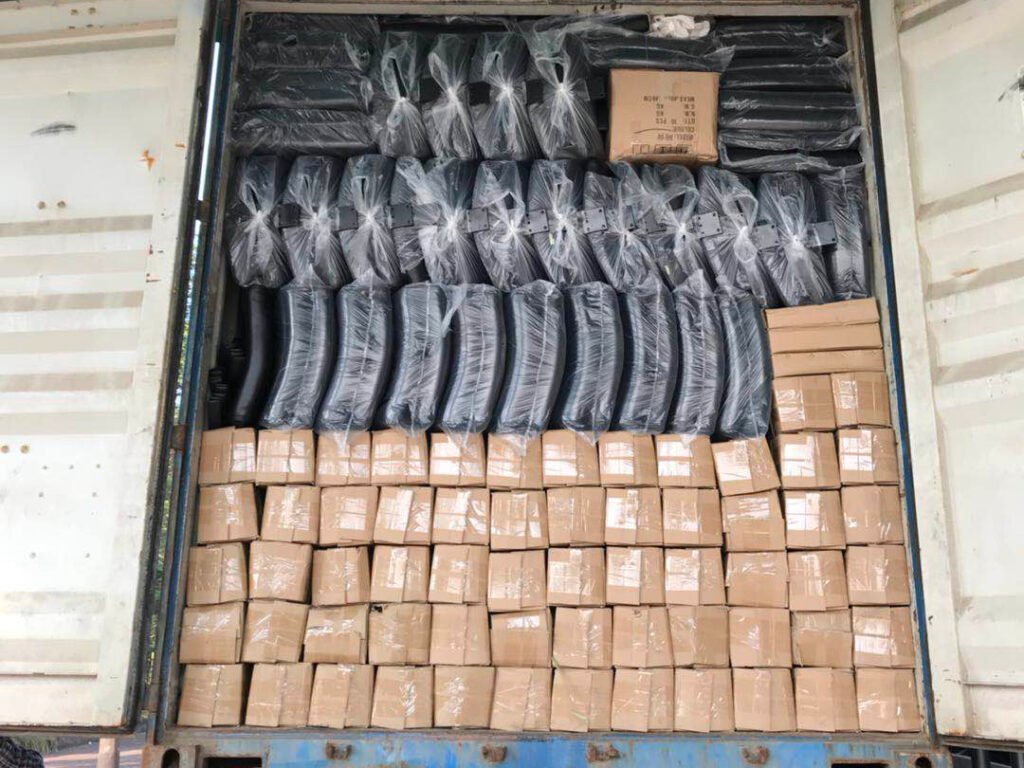
Preventing biological damage requires eliminating cellulose nutrients that attract subterranean termites, wood-boring beetles, and fungal mold. In tropical climates, ambient humidity softens organic binders in standard particle boards, creating hospitable environments for fungal colonization and rapid insect infestation that hollows out furniture from within.
To achieve complete termite and moisture immunity, educational tenders must specify non-porous synthetic materials or hermetically sealed panels. Blow-molded virgin polypropylene and solid compact phenolic resin boards contain zero wood fibers, making them inherently termite-proof and fully waterproof. When wood composite panels are chosen for acoustic or architectural requirements, they must be treated with non-leaching borate compounds and sealed along all edges with seamless polyurethane banding. Furthermore, chair shells and desk book-boxes must incorporate drainage channels and ventilation slots to prevent condensation accumulation during rainy seasons. Reviewing our technical material durability FAQ provides in-depth chemical and moisture tolerance data for school projects.
Aligning Material Specifications with Institutional Procurement and Tender Standards
Large-scale educational tenders across Africa follow structured technical benchmarks. National programs such as Nigeria Universal Basic Education Commission (UBEC), Kenya Competency-Based Curriculum (CBC) infrastructure rollouts by the Ministry of Education, Ghana Free Senior High School (SHS) initiative, and Tanzania Secondary Education Quality Improvement Program (SEQUIP) require proven material compliance. Donor-backed projects funded by the World Bank, African Development Bank (AfDB), and UNDP demand strict adherence to international safety guidelines.
Suppliers and contractors must certify that classroom furniture meets EN 1729-1 (ergonomic dimensions) and EN 1729-2 (structural strength and safety), along with ISO 9001 and ISO 14001 factory quality systems. Mandatory import conformity documents, including Nigeria SONCAP, Kenya PVoC, and Ghana GSA certificates, must be validated before container dispatch. For comprehensive compliance steps, consult our export compliance checklist. Institutions outfitting multi-purpose school halls can also coordinate classroom packages with certified auditorium seating to optimize sea freight logistics.
Total Cost of Ownership: Calculating 10-Year Lifecycle Value for African Schools
When planning furniture budgets, procurement teams must look past upfront purchase prices to assess Total Cost of Ownership (TCO). Low-grade desks made with thin metal and unsealed particle board often sell for USD 18 to 22 (NGN 30,000 / KES 2,800 / GHS 320 / TZS 58,000), but suffer a 35% annual failure rate, requiring full replacement within two to three years.
Conversely, heavy-duty desks built with 1.2mm powder-coated steel frames, anti-corrosion zinc undercoats, and UV-stabilized virgin polymer tops cost USD 28 to 36 (NGN 48,000 / KES 4,500 / GHS 520 / TZS 95,000). These reinforced units provide an operational life exceeding 10 to 12 years with minimal maintenance. Over a 10-year cycle in a 1,000-student school, climate-resilient furniture cuts overall capital expenditure by more than 40% while preventing classroom disruption. For further budgeting insights, read our complete guide on choosing school classroom furniture.